


Engineering
Back-End Development Services
The APIs, services and data behind your SaaS platform or mobile app, built for the scale, security and features still to come, by founders you talk to, with a senior engineer leading and every line yours.
Talk to the foundersThe engine behind your product, built to be fast, dependable and yours
Every tap, payment and search in your product ends up in the back end. It holds your business rules, keeps data consistent across channels and decides how quickly your app responds. We design and build APIs, services, data stores and integrations that stay quick under load and easy to change as your plans evolve.
Your project is led by a senior engineer, and you talk to the founders who build it rather than a salesperson. We use AI to take on repetitive work, while an engineer reviews every line and owns the architecture.
We build on open, widely used technologies and deploy into cloud accounts you control, so you are never tied to us or to a closed platform.
What we do
Back-end development services for products that need to scale
From a first API for a new product to untangling a system that has outgrown itself, we cover the server side end to end.
Custom back ends for busy platforms
Business logic, booking and order flows, payments, user accounts and the APIs your web and mobile apps call, built to handle peaks in traffic without slowing down or losing data.
System takeover and stabilisation
Cloud-native modernisation
Architecture and roadmap design
APIs and integrations
Security and compliance reviews
Service benefits
How a strong back end pays off
- 01
One version of the truth on every channel
Customers switch between app, website and support mid-task. A well-designed back end keeps profiles, orders and bookings in sync in real time, so every touchpoint shows the same, current picture.
- 02
Senior design, AI-assisted delivery
AI drafts boilerplate, migrations and test scaffolding. Our senior engineers spend their time on data models, concurrency and the business rules that are hard to get right, and review everything that ships.
- 03
Response times that feel instant
Careful queries, caching, background jobs and the right data store for each job keep responses quick, which matters even more when AI features and live updates depend on fast lookups.
- 04
Security designed in, not bolted on
Least-privilege access, encrypted data, audited permissions and monitoring that flags unusual behaviour, including automated abuse and attempts to manipulate AI features.
- 05
Freedom to change direction
Custom services on standard technologies mean you are not boxed in by a closed SaaS tool. You own the code and infrastructure, so adding a new channel or integration is your call.
- 06
Problems found before users notice
Structured logs, metrics, tracing and alerts on every service show us where time is spent and what is failing, so issues are fixed early and releases stay calm.
Built for products used on many devices at once
Modern products rarely live on one screen. The same customer may browse on a phone, pay on a laptop and get a notification on a watch, sometimes within minutes. The back end is what keeps that experience coherent.
We design data flows around events, so a change in one place reaches every channel quickly and reliably, even when a network or a third-party service misbehaves.
What that looks like in practice:
- Event-driven updates with queues and streams such as Kafka or managed cloud equivalents
- Idempotent APIs, so retried requests never charge a card or book a slot twice
- Caching with Redis where speed matters, with clear rules for when data is refreshed
- Offline-friendly sync for mobile apps, with conflicts resolved predictably

Architecture styles
Modular monolith, microservices or serverless?
There is no single right architecture, only the right one for your stage, team and traffic. Many products start as a well-structured monolith and split off services only where it pays. Here is how we weigh the options with you.
| Modular monolith | Microservices | Serverless functions | |
|---|---|---|---|
| In short | One deployable application, divided internally into clear modules. | Separate services, each owning its data and deployed independently. | Small functions run on demand by the cloud provider. |
| Speed to start | Fastest: one codebase, one pipeline, simple local setup. | Slower: more infrastructure, contracts and tooling up front. | Fast for focused tasks and event handlers. |
| Scaling | Scales as a whole, which is enough for most products for a long time. | Each service scales on its own, useful when loads differ widely. | Scales automatically with demand, down to zero when idle. |
| Operational effort | Low: one thing to deploy, monitor and secure. | High: needs mature CI/CD, observability and on-call practices. | Low for servers, with care needed around cold starts and limits. |
| Best for | New products, MVPs and small teams that want to move quickly. | Large platforms with several teams and clearly separate domains. | Background jobs, webhooks, scheduled tasks and spiky workloads. |

Is your back end slowing your roadmap down? Talk to the founders who would fix it.
Contact usTechnologies
Back-end technologies we choose from
We match the stack to the job: the stability your domain needs, the speed your users expect and the skills your team already has.

Node.js and NestJS
TypeScript on the server for fast-moving web products, real-time features and teams that want one language across front and back end. NestJS adds structure for larger codebases.
Python with Django and FastAPI
Django for data-rich products that benefit from a mature admin and ORM, FastAPI for lean, typed APIs, and Python wherever the back end sits close to data science or AI work.
Go
Compiled, lightweight services for high-concurrency workloads, networking and infrastructure tooling, where low memory use and predictable performance count.
.NET and Java
Strongly typed, long-lived platforms for regulated and enterprise environments such as finance and insurance, including Kotlin on the JVM where it suits the team.
Databases and caching
PostgreSQL as our default relational database, with MySQL, MongoDB and Redis where they fit, plus search engines and vector stores when products need full-text or semantic search.
Messaging and streaming
Kafka, RabbitMQ and managed cloud queues for event-driven designs, background processing and reliable communication between services.
APIs
REST with OpenAPI specifications, GraphQL where clients need flexible queries, and gRPC between internal services, all versioned and documented.
Cloud and containers
AWS, Microsoft Azure and Google Cloud, with Docker, Kubernetes where the scale justifies it, and Terraform so every environment is reproducible.
Observability
OpenTelemetry tracing, structured logging, metrics dashboards and alerting, so we can see how each request moves through your system.
How we work
How a back-end engagement unfolds
Each stage ends with something you can inspect: a document, a running service or a dashboard. A founder stays involved throughout, and nothing goes live without an engineer's review.
- 01
Assess
We study your domain, data, traffic patterns and any existing code, and agree what success looks like, from response times to recovery targets.
- 02
Design
Data models, API contracts and an architecture sketch, reviewed with you and your front-end or mobile team before building starts.
- 03
Build
Services delivered in short sprints with automated tests, preview environments and infrastructure as code from the first week.
- 04
Harden
Load testing, security checks, backup and restore drills, and monitoring with alerts tuned to what really matters.
- 05
Run and evolve
We watch production, fix issues quickly and keep improving performance and features through ongoing support and evolution.
Security
Protecting your data, your users and your reputation
The back end is where your most valuable data lives, so it is where attackers aim. We treat security as part of the design, then check it again before every major release.
As more products add AI features, new risks appear: models that can be tricked by crafted input, or that expose data they should not. We build guardrails for those too, with regulations such as GDPR and the EU AI Act in mind.
Core protections
Authentication and access
Proven identity providers, multi-factor sign-in, short-lived tokens and role-based permissions checked on every request.
Data protection
Encryption in transit and at rest, secrets in managed vaults, and personal data kept to the minimum your product needs.
Dependency hygiene
Automated scanning of libraries and container images, with updates applied as a routine, not after an incident.
AI and automation risks
Prompt injection guardrails
Input filtering, limited tool permissions and output checks, so AI features cannot be talked into actions they should not take.
Bot and abuse protection
Rate limits, anomaly detection and challenge flows that slow down scrapers and automated attacks without bothering real users.
Audit trails
Clear records of who did what and when, including actions taken by automated agents, for investigations and compliance.
Case studies
Recent work from Authect
 Mobile AppReact NativeSupabaseBredinoBredino: Verified Matchmaking & Breeding Platform for Purebred Animals39App Screens100%Verified Docs109Automated Tests
 FintechTradingArtificial IntelligenceSmartTraderSmartTrader: Technical Analysis & Automated Trading Platform100k+Active Traders< 20msLatency50+Smart Tools
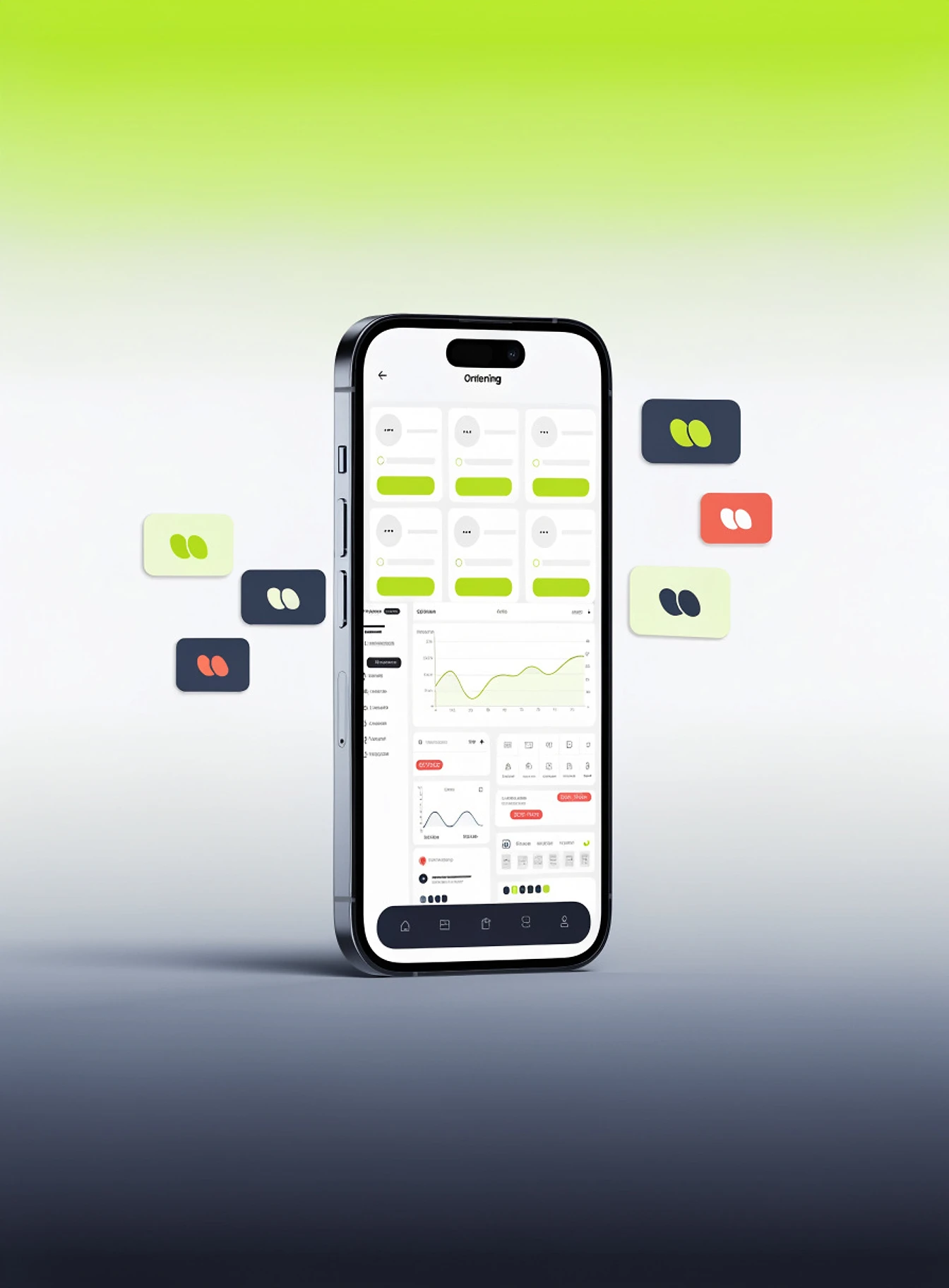 HospitalityFoodTechSaaSFoodNotifyFoodNotify: F&B Management & Automated Kitchen Operations Platform30k+Locations15%Cost Reduction100+Integrations
Industries
Back-end development use cases by industry
Fintech
Ledgers, payment processing, reconciliation and fraud checks where correctness is non-negotiable, with idempotent transactions, strong audit trails and integrations with banks and payment providers.

Logistics
Shipment tracking, routing and warehouse systems that process a steady stream of location and status events, and keep customers, drivers and partners looking at the same live data.

Insurance
Rating engines, policy administration and claims workflows that connect to older core systems through well-defined APIs, so new digital channels can launch without replacing everything at once.

E-commerce
Product catalogues, pricing, inventory sync across channels and order pipelines that stay fast during promotions and keep stock levels accurate when many people buy at once.

Energy
Platforms that ingest meter and sensor readings, run billing and forecasting jobs, and expose data to customer apps and grid partners securely and on time.

Healthcare
Scheduling, records and messaging services that protect sensitive data with strict access controls and encryption, and connect safely to clinical and laboratory systems.

How we cooperate
Flexible ways to build and run your back end
Fixed-price projects suit a clearly scoped API or migration, monthly sprints suit evolving platforms, and support and evolution keeps live systems healthy after launch.
- 01
Fixed-price project
A clearly scoped product delivered for an agreed price and timeline. Ideal for MVPs and well-defined projects.
- Our responsibility:
- the scope, plan, budget, quality and delivery of the agreed product.
- Your responsibility:
- business context, timely feedback and sign-off on the scope.
- 02
Monthly sprints
A dedicated team, led by a senior engineer, working in short sprints, billed monthly. Ideal when your priorities evolve as you learn from users.
- Our responsibility:
- the team, sprint delivery, engineering quality and transparent reporting.
- Your responsibility:
- the product vision and setting priorities with us each sprint.
- 03
Support and evolution
After launch, we keep your product fast, secure and up to date, and keep shipping improvements as your business grows.
- Our responsibility:
- monitoring, updates, fixes and agreed response times.
- Your responsibility:
- reporting issues and planning the next improvements with us.
Why Authect
Why companies trust Authect with their back end
- 01
Straight to the architects
Talk directly to the founders and the senior engineer designing your system. No hand-offs, no sales layer, and no detail lost between the conversation and the code.
- 02
Fast, and reviewed by people
AI shortens the routine work, and an engineer reviews every line before it reaches production. That is how a small team delivers quickly without cutting corners.
- 03
No lock-in, ever
Code, databases and cloud accounts belong to you from day one. Our clients across Europe, the Middle East and beyond can bring the work in-house whenever they choose.
Insights
 R&DPasskeys for business applications: how they work and how to roll them outView R&D post
 NewsNew pages: our front-end, back-end and e-commerce development workView news
 GuideWhat is system integration? A practical guide to connecting your softwareView guide
 GuideWhat are web development services? A practical guide for buyersView guide
 GuideWhat are mobile app development services? A guide for iOS and AndroidView guide
 GuideTypes of software development: a complete overviewView guide
FAQs
FAQs about back-end development
How do I choose the right back-end technology for my product?
Start from your needs rather than trends: the kind of data you handle, the traffic you expect, any regulatory requirements and the skills of the team who will maintain it. We usually recommend mainstream options such as Node.js, Python, Go, .NET or Java, and explain the trade-offs in writing so you can make the call with confidence.
How long does it take to build a back end?
A focused API for an MVP can be ready in weeks, while a platform with many integrations is delivered in stages over several months. After a short assessment, we give you a plan with milestones, so you know what will be live and when.
How much do back-end development services cost?
It depends on the scope, the number of integrations and how demanding your performance and security needs are. We offer fixed-price projects for well-defined work and monthly sprints when priorities are still moving. The founders give you the estimate themselves, after understanding what you need.
What is a back-end API?
An API, or application programming interface, is the set of rules your apps use to talk to the server: to sign in, fetch data or place an order. A good API is predictable, documented and versioned, so your web and mobile apps, and your partners, can rely on it as the product changes.
Which languages are most common for back-end development?
JavaScript and TypeScript with Node.js, Python, Java, C# with .NET, Go and PHP are among the most widely used. Each has strengths: Node.js for real-time web products, Python for data and AI, Go for high-concurrency services, and Java or .NET for large enterprise systems.
Can you work with our existing systems and team?
Yes. We often extend or stabilise back ends that others started, and we work alongside in-house engineers. We begin with a review, agree conventions with your team and leave documentation behind, so everyone can keep working on the system with confidence.
Who owns the code and the infrastructure?
You do, from day one. Repositories, databases and cloud accounts are set up in your name, and we work inside them. There is no lock-in: you can keep working with us, take the system in-house or hand it to someone else.